Storm damage puts homeowners in a difficult position. One day your roof is fine, and the next you’re dealing with missing shingles, leaks, insurance paperwork, and contractors knocking on your door. In moments like these, choosing the right roofing contractor matters more than ever. While many companies promise fast solutions, not all contractors offer the same level of accountability, experience, or long-term support. For homeowners searching for a trusted roofing contractor Quad Cities residents can rely on, understanding the difference between a local roofer and a storm chaser can help prevent costly mistakes.
What Is a Storm Chaser Roofing Company?
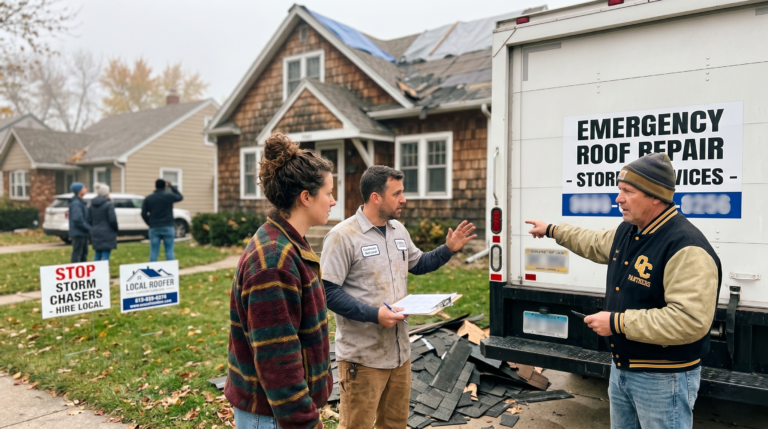
After a major hailstorm or wind event, neighborhoods often become flooded with roofing companies from out of town. These companies are commonly known as “storm chasers.” Their business model revolves around traveling from one storm-damaged area to another, completing as many jobs as possible before moving on to the next city.
Not every out-of-town roofing company is dishonest. However, storm chasing operations are often focused on speed and volume instead of long-term customer relationships. Many homeowners do not realize the difference until problems begin appearing months or years later.
Storm chasers usually arrive quickly after severe weather. They go door to door, offer free inspections, and often encourage homeowners to sign contracts immediately. In many cases, they present themselves as insurance experts and promise to make the claims process simple.
At first glance, that can sound reassuring. The problem is that homeowners are often making decisions during stressful situations. A damaged roof naturally creates urgency, and storm chasers know that.
As Ryan Peterson, the COO of Peterson Roofing, explained during the Roots to Renovation podcast, one homeowner hired a large regional roofing company after storm damage. The roof was completed, but the gutters were never finished. Years later, the company returned wanting additional money to complete the work. Situations like that leave homeowners frustrated, confused, and stuck dealing with unfinished projects.
The biggest issue is accountability. Once storm chasers leave town, homeowners may struggle to contact them for repairs, warranty claims, or questions about the installation.
Why Homeowners Are More Vulnerable After a Storm
Most people do not plan for roof replacements. Storm damage creates immediate pressure, especially when homeowners are worried about water intrusion or insurance deadlines.
That pressure often leads to rushed decisions.
A contractor shows up at the door. They say they were “working in the neighborhood.” They promise fast service and limited-time discounts. They might even claim they can waive deductibles or start work immediately.
For a homeowner already dealing with stress, those promises can feel like relief.
Unfortunately, urgency is one of the biggest reasons homeowners end up hiring the wrong contractor.
Severe weather also creates confusion because roofing is highly specialized work. Most homeowners do not know how to evaluate roofing systems, identify proper installation methods, or compare warranties. They rely on the contractor to guide them honestly.
That is why trust matters so much.
A reputable local roofer understands that homeowners need education before they need a sales pitch. Instead of pressuring someone into signing quickly, experienced contractors take the time to inspect the roof thoroughly, explain the damage clearly, and answer questions honestly.
10 Warning Signs You May Be Dealing With a Storm Chaser
Many storm chasing companies follow similar patterns. Learning to recognize the warning signs can help homeowners avoid major headaches later.
1. They Pressure You to Sign Immediately
One of the biggest red flags is aggressive sales pressure.
If a contractor insists that you must sign today to lock in pricing or reserve materials, take a step back. Reputable roofing companies understand that homeowners need time to review estimates, verify credentials, and make informed decisions.
Ryan Peterson pointed out that pushy sales tactics are often a sign that the contractor is more focused on closing the sale than doing the job correctly.
2. They Cannot Provide Long-Term Local References
Any contractor can show pictures from jobs completed last week. What matters is whether those roofs are still performing properly years later.
Experienced local roofers should be able to provide references from homeowners in the same community whose roofs have held up over time.
Jody Peterson, the founder and CEO of Peterson Roofing, emphasized the importance of looking at older projects, not just recent installations. A roof may look great immediately after completion, but long-term performance tells the real story.
3. They Have No Permanent Local Presence
Some storm chasing companies use temporary satellite offices to appear local. Others simply operate out of hotel rooms or rented spaces during storm season.
Before hiring a contractor, ask where their main office is located. Verify the address online and confirm that the company has an established presence in the area.
A contractor who truly serves the community should still be there long after the storm season ends.
4. Their Communication Is Inconsistent
Poor communication early in the process usually becomes worse after the job begins.
If calls are not returned promptly or answers feel vague, that should raise concerns. A trustworthy contractor communicates clearly about timelines, materials, warranties, and expectations.
Good communication is not just customer service. It is a sign of professionalism and organization.
5. They Offer Vague Estimates
A roofing estimate should contain detailed information about materials, labor, warranties, cleanup, ventilation, and project scope.
Storm chasers often provide simplified estimates that leave out important details. That creates room for unexpected charges or incomplete work later.
A thorough estimate demonstrates that the contractor understands roofing systems instead of simply selling contracts.
6. They Avoid Questions About Licensing and Insurance
In Iowa, roofing contractors must meet licensing requirements and carry proper insurance.
Jody Peterson explained during the podcast that some contractors cut corners by avoiding overhead costs tied to licensing, bonding, and insurance. While that may allow them to offer lower prices, it creates significant risks for homeowners.
Without proper insurance, homeowners could become financially responsible for accidents or property damage.
7. They Focus Only on the Roof Surface
A quality roofing contractor evaluates the entire roofing system.
That includes:
- flashing
- ventilation
- decking
- skylights
- gutters
- drainage
- attic airflow
Ryan Peterson shared an example involving solar panels installed on a roof with failing skylights. The roof should have been repaired before the solar installation occurred. Instead, the homeowner later faced a costly situation requiring both skylight replacement and solar panel removal.
Experienced contractors look beyond the obvious.
8. Their Warranty Sounds Too Good to Be True
Homeowners often hear promises like “lifetime warranty” without understanding what is actually covered.
A trustworthy contractor explains both manufacturer warranties and workmanship warranties in writing.
More importantly, they explain who will still be around to honor those warranties years later.
As Jody Peterson noted, even the best warranty only matters if the company behind it remains accountable.
9. They Rely on High-Volume Subcontracted Labor
Many storm chasing companies rely heavily on temporary labor crews that move from state to state.
That can create inconsistencies in workmanship and quality control.
Homeowners should ask who will actually complete the installation and whether those crews are experienced with the materials being used.
10. They Disappear After Storm Season
This is the biggest concern of all.
Once storm chasers move to the next affected area, homeowners often struggle to contact them for warranty issues or repairs.
Leaks may appear months later. Flashing problems may surface after winter weather. Gutters may remain unfinished.
At that point, the homeowner usually ends up hiring another roofing company to fix the original contractor’s mistakes.
The Long-Term Risks of Hiring the Wrong Roofer
Roofing mistakes are expensive because roofs protect every other part of the home.
A poor installation can lead to:
- water intrusion
- mold growth
- insulation damage
- structural issues
- higher energy bills
- interior repairs
The financial consequences often extend far beyond the roof itself.
One of the most common misconceptions is that all roofing companies install products the same way. In reality, installation quality varies dramatically.
Even premium roofing materials can fail when installed improperly.
Homeowners also underestimate how difficult it can be to resolve problems after a contractor disappears. Insurance claims become more complicated. Warranty coverage may be denied. Repair costs may fall entirely on the homeowner.
That is why choosing a contractor based solely on price is risky.
A lower bid may look appealing upfront, but lower pricing often comes from reduced labor quality, missing insurance coverage, inexperienced crews, or shortcuts during installation.
Roof replacements are long-term investments. The goal should not be finding the cheapest contractor. The goal should be finding the right contractor.
Why Local Roofing Contractors Offer Better Long-Term Protection
Local roofing companies operate differently because their reputation depends on the community they serve.
They are not just completing projects and leaving town. They are building relationships with homeowners, suppliers, inspectors, and neighborhoods over decades.
That accountability changes everything.
When homeowners work with established local roofers, they know where to find them if questions or concerns arise later. There is peace of mind in knowing the company has real roots in the area.
Jody Peterson highlighted this during the podcast by explaining that Peterson Roofing has operated under the same name in the Quad Cities area for more than four decades. Longevity matters because it demonstrates consistency, financial stability, and long-term accountability.
Local contractors also understand regional weather conditions better than out-of-town companies.
In the Midwest, roofing systems must withstand:
- hailstorms
- strong winds
- snow loads
- ice dams
- freeze-thaw cycles
- heavy rain
Experienced local roofers know which materials and installation methods perform best under those conditions.
They also understand local permitting requirements and inspection standards.
That familiarity helps projects move smoothly while reducing compliance issues.
Perhaps most importantly, local contractors rely heavily on word-of-mouth reputation. They cannot afford to disappear after projects because they live and work in the same community as their customers.
Why Manufacturer Certifications Matter
Manufacturer certifications are another important factor homeowners should consider.
Certain roofing manufacturers only extend enhanced warranty options to contractors who meet strict installation and training standards.
Those certifications are not handed out casually.
For example, Owens Corning certification allows qualified contractors to offer stronger warranty coverage on both labor and materials. That additional protection benefits homeowners because it creates another layer of accountability.
During the podcast, Jody Peterson shared a story about a roof installed years earlier that experienced discoloration issues. Because of the manufacturer-backed warranty, the materials were covered and the homeowner received support long after the original installation.
That kind of long-term protection rarely exists with fly-by-night roofing companies.
Homeowners should always ask whether a contractor is manufacturer certified and what that certification actually means.
Questions Every Homeowner Should Ask Before Hiring a Roofer
The best roofing contractors welcome questions.
Homeowners should never feel uncomfortable asking for clarification, documentation, or references before signing a contract.
Important questions include:
How Long Have You Been Operating Locally?
Longevity demonstrates stability and community trust.
Are You Licensed and Insured?
Verify both licensing and insurance coverage before work begins.
Can You Provide Local References?
Ask for references from projects completed several years ago.
Who Will Perform the Installation?
Understand whether the company uses experienced in-house crews or temporary subcontractors.
What Warranties Are Included?
Request warranty details in writing.
Will You Handle Permits?
A reputable contractor should understand local permit requirements.
Is the Estimate Detailed?
Review the scope of work carefully.
What Happens If Problems Arise Later?
Ask how warranty claims and post-project service requests are handled.
A trustworthy contractor should answer these questions confidently and transparently.
Why Honest Roofing Advice Matters
One of the clearest signs of an experienced roofing company is honesty.
Not every roof needs immediate replacement.
Some contractors push replacements because larger projects generate more revenue. Ethical contractors focus on what is actually best for the homeowner.
Ryan Peterson discussed this idea during the podcast, explaining that sometimes the right recommendation is telling homeowners they do not need a new roof yet.
That kind of honesty builds trust because it prioritizes long-term relationships over short-term sales.
Homeowners should look for contractors who educate rather than pressure.
A good roofer should help homeowners understand:
- the condition of the roof
- realistic repair options
- expected lifespan
- maintenance recommendations
- future planning considerations
The goal should always be informed decision-making.
Why Choosing the Right Roofer Matters Long After the Storm Ends
Severe weather creates stressful situations for homeowners. When storms hit, it is natural to want fast answers and quick repairs. However, rushing into a roofing contract without proper research can lead to expensive problems later.
Storm chasers often rely on urgency, aggressive sales tactics, and temporary operations. Local roofing companies rely on reputation, accountability, and long-term customer relationships.
The difference becomes especially important years after the installation, when warranty issues, repairs, or questions arise.
Homeowners deserve contractors who will still answer the phone long after the storm has passed.
If you want to make the best decision for your home, take the time to verify credentials, compare estimates carefully, ask detailed questions, and choose a contractor with deep roots in the community.
For homeowners looking for a dependable roofing contractor Quad Cities families have trusted for decades, local experience and accountability still matter.
Watch the Full Podcast Episode on YouTube
Want to hear more expert insights from Jody and Ryan Peterson? Watch the full episode of Roots to Renovation on YouTube to hear real-world stories, roofing advice, and practical guidance for homeowners navigating storm damage, contractor selection, warranties, and long-term roof protection. The full conversation offers valuable insight into what separates trustworthy roofing professionals from contractors who disappear after the job is done.
Frequently Asked Questions
What is a storm chaser roofing company?
A storm chaser roofing company is a contractor that travels to areas recently impacted by severe weather to secure roofing projects quickly. Many leave town after storm season ends, making it difficult for homeowners to receive long-term support or warranty service.
How can I tell if a roofing company is legitimate?
Verify that the contractor is licensed, insured, locally established, and able to provide long-term local references. Reputable contractors should also offer detailed written estimates and clear warranty information.
Why is hiring a local roofing contractor important?
Local roofing contractors are more accountable because they operate within the community long term. They understand regional weather conditions, local building codes, and permit requirements while remaining available for future service or warranty needs.
Should I trust a contractor who knocks on my door after a storm?
Homeowners should proceed carefully with door-to-door roofing sales. While some contractors may be legitimate, aggressive sales pressure and requests for immediate signatures are common warning signs of storm chasing operations.
What should a roofing estimate include?
A detailed roofing estimate should outline materials, labor, warranty information, ventilation work, cleanup procedures, timelines, and the full project scope. Vague estimates can lead to hidden costs or incomplete work.
Do roofing manufacturer certifications matter?
Yes. Manufacturer certifications often indicate that a contractor meets specific training and installation standards. Certified contractors may also offer enhanced warranty options backed by the manufacturer.
What happens if a roofing company disappears after the job?
If the contractor cannot be reached later, homeowners may struggle with warranty claims, repairs, or unresolved installation issues. In many cases, another roofing company must be hired to correct the original work.
Is the cheapest roofing estimate always the best option?
Not necessarily. Extremely low bids may reflect shortcuts in labor, materials, insurance coverage, or installation quality. Homeowners should evaluate experience, reputation, communication, and warranty support alongside pricing.