Storms can move through the Quad Cities quickly, but roof damage does not always show up right away. Hail, wind, heavy rain, snow, and ice can leave behind problems that look minor from the street but become expensive later. For homeowners researching storm damage roofing Quad Cities, the first step is knowing what to look for, what to document, and when to call a trusted local roofer.
Why Storm Damage Is Not Always Obvious
After a strong storm, most homeowners step outside, look up from the driveway, and check whether any shingles are missing. That is a good starting point, but it does not tell the whole story.
A shingle can stay in place after hail but still be bruised underneath. Wind can lift a shingle, weaken the seal, and allow it to settle back down. Granules can wash into the gutters even when the roof still looks normal from the ground.
That is why professional inspections matter after severe weather. In an episode of Roots to Renovation, Ryan Peterson of Peterson Roofing described a hail-damaged home where siding and vinyl shutters showed obvious impact damage. The roof, however, was harder to read from the ground. Once inspected up close, the hail marks were clear.
That kind of field experience is valuable because homeowners do not need scare tactics after a storm. They need a roofer who can separate normal wear from real storm damage and explain the difference in plain language.
The Most Common Types of Storm Damage on Quad Cities Roofs
The Quad Cities sees a wide mix of weather that can be tough on roofing systems. Spring and summer storms often bring hail, wind, lightning, and heavy rain. Winter adds snow, ice, freeze-thaw cycles, and ice dams.
Each type of weather affects a roof differently. Knowing the difference helps homeowners respond calmly and make better decisions after a storm.
Hail Damage
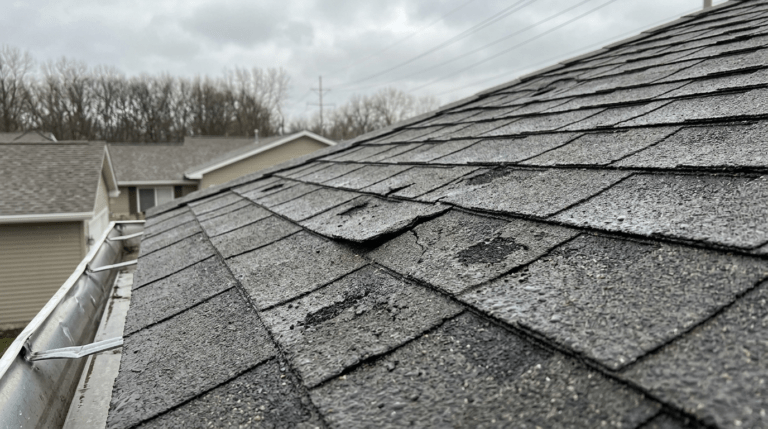
Hail is one of the most common causes of storm-related roof damage in Iowa and Illinois. When hail hits an asphalt shingle, it can knock off the protective granules that shield the asphalt underneath. Those granules help protect the shingle from sunlight, weather exposure, and premature aging.
Jody Peterson, the founder and CEO of Peterson Roofing, described hail damage clearly during the podcast. He explained that hail “literally impacts the roof,” leaving marks where it knocks granules off and exposes the asphalt below. Over time, that exposed area can wear down faster than the rest of the shingle.
Hail damage does not always cause an immediate leak. The roof may continue shedding water for a while, but damaged areas can weaken and age faster. Left alone, those spots may become more vulnerable to cracking, water intrusion, and early roof failure.
Wind Damage
Wind damage can be easier to notice when shingles are missing, but not every wind issue is obvious. Strong gusts can lift shingles, break seals, damage ridge caps, or loosen flashing around chimneys, vents, and roof edges.
Modern shingles are built to perform better than older materials, especially when installed correctly. In the podcast, Jody and Ryan noted that many current roofing products are rated for high winds. They also pointed out that blow-offs during moderate wind events may indicate installation problems, aging materials, or poor nailing.
That detail matters. If shingles blow off during a storm, the problem may not be the storm alone. It may also reflect the condition of the roof before the weather hit.
Snow, Ice, and Ice Dams
Winter storms deserve attention too. Homeowners often think of roof damage as a spring or summer problem, but snow and ice can create serious leaks.
An ice dam forms when snow melts on a warmer part of the roof and refreezes near the colder eaves. As ice builds up, water can back up under the shingles. If the roof does not have proper ice and water protection, that water can enter the home.
Ryan Peterson emphasized the importance of proper ventilation and ice guard installation when discussing winter roof problems. Those details may not be visible from the curb, but they matter when the next heavy snowstorm hits.
Lightning, Tornadoes, and Severe Wind Events
Not every storm produces standard shingle damage. Lightning strikes, falling limbs, tornadoes, and extreme wind events can create sudden roof problems, including holes, torn-off sections, damaged decking, broken rafters, or active leaks.
Jody shared a memorable story about a home where lightning punched a large hole through a garage roof. Thankfully, the home did not catch fire, but the damage was dramatic. Stories like that show why storm response cannot be one-size-fits-all. Sometimes a roof needs a careful inspection. Other times, it needs emergency protection immediately.
What Hail Damage Looks Like on Shingles
Hail damage can be hard for an untrained eye to identify. It does not always look like a dented car hood or broken window. On shingles, it may show up as bruising, missing granules, exposed asphalt, or small impact marks.
Some hail marks look circular, while others appear as crescent-shaped or C-shaped bruises. Ryan mentioned seeing C-shaped bruising on terracotta-colored shingles during an inspection. That roof color made the marks easier to notice, but many shingle colors hide damage well.
It also helps to look beyond the roof. Hail often leaves clues around the property. Dented gutters, damaged downspouts, cracked siding, torn window screens, punctured shutters, and chipped paint can all suggest that the roof may have taken impact too.
That does not mean every hailstorm requires a roof replacement. It means the roof should be checked by someone who knows how to distinguish cosmetic wear from functional damage.
Why a Ground-Level Check Has Limits
A ground-level check is useful, but it can only reveal so much. From the driveway, you may see missing shingles, sagging gutters, large debris, or obvious roof openings. You probably will not see bruised shingles, weakened seals, small punctures, damaged flashing, or soft decking.
Roof pitch, height, and shingle color all affect visibility. A steep roof may hide entire slopes from view. A two-story home can make even larger issues difficult to spot. Dark or patterned shingles can make granule loss harder to identify.
There is also a safety issue. Homeowners should not climb onto a roof after a storm, especially if it is wet, icy, steep, or covered with debris. Peterson Roofing looks at the full roofing system during an inspection, including shingles, flashing, vents, valleys, roof edges, decking conditions, and signs of water entry.
Safe Signs Homeowners Can Look For After a Storm
You do not need to climb a ladder to notice possible roof damage. Start with what you can see safely from the ground.
Look for shingles in the yard, driveway, landscaping, or near downspouts. Check whether gutters are bent, loose, dented, or filled with shingle granules. Walk around the home and look for damage to siding, shutters, window screens, fascia, soffit, and outdoor furniture.
Inside the home, pay attention to new ceiling stains, damp insulation, musty smells, peeling paint, or water marks near exterior walls. If you can safely access the attic, look for wet decking, drips, daylight through roof boards, or dark staining near vents and valleys.
If there is active water intrusion, call a professional quickly and focus on protecting the interior. Avoid walking on the roof, touching loose electrical lines, or moving heavy debris that may be unstable.
What to Do in the First 24 Hours After Severe Weather
The first day after a storm can feel overwhelming, especially if neighbors are finding damage or contractors are already knocking on doors. A calm process helps.
Start by checking your family’s safety and making sure there are no immediate hazards around the home. Then walk the property from the ground and take photos of visible damage. Include the roof from multiple angles, along with gutters, siding, screens, windows, fences, vehicles, and debris that may have struck the home.
Write down the date and approximate time of the storm. This simple step can matter later. Ryan noted in the podcast that insurance companies are tightening how they handle claims, and an incorrect storm date can create problems. Clear documentation helps homeowners communicate more accurately.
Next, call a reputable local roofing company for an inspection. You do not need to diagnose the roof yourself. A professional inspection can confirm whether there is damage, whether repairs are urgent, and whether the issue may be related to storm activity, age, installation, or normal wear.
It is also wise to be cautious with high-pressure door knockers. Not every contractor who appears after a storm is local, experienced, or available for long-term follow-up. Take time to verify reputation, local presence, and experience before signing anything.
Documentation and Insurance: Why Details Matter
Storm damage documentation is not just busywork. Photos, dates, notes, and inspection findings can help create a clearer record of what happened. Insurance resources often advise homeowners to keep records after severe weather, especially when water enters the home or exterior materials are damaged.
For roof-related damage, include both wide photos and close-up photos when safe. Wide photos show where the damage is on the property. Close-up photos show the condition of specific materials. If water entered the home, document interior stains, wet flooring, damaged belongings, and any temporary steps taken to reduce further damage.
A roofing contractor can also provide a written estimate or inspection report. That does not guarantee an insurance outcome, but it can help homeowners understand the scope of the issue and speak more confidently with their insurance company.
Avoid guessing. If you do not know when damage occurred, be clear about that. If you are unsure whether a mark is storm damage or age-related wear, let a professional inspect it. Accurate information is better than rushed assumptions.
Emergency Tarping vs. Permanent Roof Repair
Not every storm-damaged roof needs the same response. Sometimes the immediate priority is stopping water from entering the home. Other times, the right next step is a detailed inspection and planned repair.
Emergency tarping is temporary protection. It is used when shingles are missing, decking is exposed, a tree limb has damaged the roof, or water is actively leaking inside. The goal is to reduce water intrusion until a permanent solution can be completed.
Permanent repair is the long-term fix. Depending on the situation, that may mean replacing a few shingles, repairing flashing, replacing damaged decking, addressing ventilation issues, or replacing a larger roof section. If the roof is older or the damage is widespread, full replacement may be the more practical recommendation.
Jody explained this difference clearly in the podcast. Tarping is for urgent protection after major damage. Permanent repairs come afterward, once the roof can be inspected and the right scope of work is determined.
Why Local Roofing Authority Matters After a Storm
After a major storm, homeowners may suddenly hear from contractors they have never seen before. Some may be legitimate. Others may be storm chasers who move from one damaged area to the next.
A local roofing company brings accountability. Peterson Roofing has served homeowners in Davenport, Bettendorf, and the greater Quad Cities area for more than 45 years. That history matters because roofing is not just about the day the work is done. It is about who answers the phone later, who understands local homes, and who stands behind the work.
Local experience also helps with diagnosis. A roofer who regularly works in the Quad Cities understands how storms move through the area, how hail and wind damage tend to show up, and how older local homes may be built. That context can make the inspection more accurate and the recommendation more practical.
Peterson Roofing’s authority comes through in the way Jody and Ryan talk about roofs. They are not trying to make every storm sound like a disaster. They explain what can happen, what homeowners should watch for, and when professional help is needed.
When to Schedule a Roof Inspection
You should consider scheduling a professional roof inspection after any significant hail or wind event in your neighborhood. Even if your roof looks normal from the street, nearby damage to siding, gutters, shutters, or vehicles can be a sign that the roof was hit too.
It is especially important to call if you see missing shingles, lifted shingles, shingle pieces in the yard, granules in the gutters, damaged flashing, ceiling stains, attic moisture, or water dripping inside the home. These signs may point to active or developing roof problems.
You should also schedule an inspection if neighbors are having verified storm damage repaired. Storms can affect one side of a street more than another, but nearby repairs are worth paying attention to.
A good inspection gives you clarity. Maybe the roof is fine. Maybe it needs a minor repair. Maybe the damage is more serious. In any case, you will be making decisions based on facts instead of guesswork.
Protect Your Home Before Small Damage Becomes a Bigger Problem
Storm damage does not always begin with a major leak. Sometimes it starts with a bruised shingle, a lifted edge, a missing seal, or granules collecting where they should not be. The earlier those problems are found, the easier it is to make a smart plan.
If severe weather recently moved through your neighborhood, do not rely on a quick glance from the driveway. Document what you can see, stay off the roof, and schedule a professional inspection with a local company that knows what Quad Cities homes face season after season.
Peterson Roofing brings decades of local experience, practical guidance, and steady communication to homeowners dealing with storm damage roofing Quad Cities concerns. Whether your roof needs peace of mind, emergency tarping, a targeted repair, or a more complete solution, the right inspection can help you take the next step with confidence.
Watch the Full Podcast Episode on YouTube
For more practical advice from the Peterson Roofing team, watch the full Roots to Renovation with Peterson Roofing podcast episode on YouTube. Mike Downer, Jody Peterson, and Ryan Peterson talk through real examples of hail damage, wind damage, winter roof problems, emergency tarping, and insurance documentation. Their conversation gives homeowners a clearer look at what experienced roofers actually check after a storm and how Peterson Roofing approaches storm inspections in the Quad Cities.
FAQs About Spotting Storm Damage on Your Roof
Can I see hail damage from the ground?
Usually, no. Some hail damage is visible from the ground, especially if shingles are missing or punctured. Most hail damage shows up as bruising, granule loss, or impact marks that require a close inspection.
What does hail damage look like on asphalt shingles?
Hail damage may look like dark spots, missing granules, exposed asphalt, soft bruised areas, or crescent-shaped impact marks. It may also appear alongside damage to gutters, downspouts, siding, shutters, window screens, or other exterior materials.
Can wind damage a roof if no shingles are missing?
Yes. Wind can lift shingles, weaken seals, loosen flashing, or create small gaps where water can enter. A roof may look complete from the ground but still have wind-related damage that affects its ability to shed water properly.
Should I climb on my roof after a storm?
No. A storm-damaged roof can be slippery, unstable, or unsafe. Homeowners should inspect from the ground, take photos where possible, and call a trained roofing professional for a closer inspection.
What should I document after a storm?
Document the date and approximate time of the storm, visible exterior damage, interior leaks, ceiling stains, damaged belongings, and any temporary steps taken to prevent further damage. Photos and notes can be helpful if you need to speak with your insurance company.
What is emergency roof tarping?
Emergency roof tarping is a temporary measure used to cover exposed or leaking areas after storm damage. It helps reduce water intrusion until permanent repairs can be made. It is not designed to replace proper roof repair.
How soon should I call a roofer after a storm?
Call as soon as you notice damage or suspect your roof may have been affected. If there is active leaking, exposed decking, or missing shingles, call immediately. If there is no emergency, a timely inspection can still help catch hidden damage early.
Do all storm-damaged roofs need to be replaced?
No. Some storm damage can be repaired, especially when it is limited and the roof is otherwise in good condition. Replacement may be recommended when damage is widespread, the roof is older, or repairs would not provide a reliable long-term solution.