
Roof Repair vs. Replacement: How Davenport Homeowners Can Make the Right Call
Post View Transcript In this episode of Roots to Renovation, host Mike Downer welcomes Jody Peterson, founder and CEO of Peterson Roofing, and Ryan Peterson, the company’s COO, for a practical conversation every homeowner eventually faces: roof repair versus full replacement. The big question—should I repair or replace my roof Davenport Iowa—does not always have a one-size-fits-all answer. As Jody and Ryan explain, the smartest decision depends on the roof’s age, the amount of damage, long-term cost, insurance concerns, and whether the home may be sold in the future. The key takeaway is simple: homeowners should not guess. A professional inspection can reveal whether a small repair will safely extend the roof’s life or whether replacement is the better investment. Peterson Roofing’s approach is built around honesty, not automatically selling a new roof. As Ryan says, some roofing companies may push replacement because “they want to make as much money as they can,” but a trustworthy contractor should recommend what they would do if it were their own home. When Roof Repair Makes Sense Repair is often the right choice when the roof is relatively young and the damage is minor. Jody explains that if a roof is only two or three years old and the repair costs between $500 and $2,000, replacing the whole roof for $20,000 would usually make little sense. That kind of guidance matters because not every missing shingle, scarred area, or localized leak requires a full tear-off. If the roof system is otherwise sound, a repair can be the most financially responsible decision. The Petersons emphasize that building trust with homeowners means being willing to say, “You do not need a new roof yet.” When Replacement Becomes the Better Investment One major rule discussed in the podcast is the 25% to 30% threshold. Jody first encountered this idea while working as a licensed contractor in Florida after hurricanes. If roughly a quarter of the roof was damaged, a full replacement often became necessary because the cost of repairing that much roof could approach the cost of replacing the entire system. The same principle applies in Iowa. Once damage becomes widespread, repairs may no longer provide lasting value. A patched roof may still have aging sections, uneven wear, and limited warranty protection. In that case, replacement gives the homeowner a fresh start and a more dependable roofing system. Roof Age Changes the Equation Ryan points out that although some shingles are marketed as “fifty-year roofs,” most homeowners should realistically expect about 25 to 30 years of useful life under normal conditions. If a roof is already 15 years old and shingles are lifting, blowing off, or showing major storm or tree damage, replacing it may be wiser than spending thousands on temporary fixes. He frames the cost in a helpful way: if a $20,000 roof lasts around 30 years, that breaks down to roughly $750 per year. Compared to repeated repairs, water damage, and insurance complications, replacement can be a strong long-term value. Why Small Repairs Can Add Up Ryan compares an aging roof to an old car that keeps “nickel-and-diming” its owner. He shares an example of a church roof where shingles blew off year after year. Each visit cost a few hundred dollars, but over time those small bills added up. At some point, repeated repairs stop being practical. A new roof can reduce stress, improve warranty coverage, and make future insurance conversations easier. The goal is not simply to spend less today, but to avoid wasting money on a roof that is already failing. Installation Quality Matters Not all roof problems come from age. Sometimes the issue is poor installation. Ryan describes inspecting a roof that was less than five years old but had major flashing problems because the homeowners hired the cheapest contractor. The shingles looked fine, but critical areas where the roof met walls had not been flashed correctly. Fixing those mistakes later can cost thousands of dollars. This is why a contractor should inspect the whole roof system, not just the shingles. Vents, flashings, skylights, and other details can determine whether repair is enough or whether the roof needs more extensive correction. Insurance and Documentation Are Important Jody warns that insurance companies are paying closer attention to roof condition. If a homeowner had a previous claim but did not fully or properly repair the damage, a future claim could be denied. Insurance companies may also conduct pre-inspections or use satellite imagery to identify questionable repairs. The good news is that proper documentation can protect homeowners. Photos, records, and proof of legitimate repair work help show that the roof was maintained correctly. Roof Condition Affects Resale Value A roof also plays a major role in resale. Ryan explains that if two similar homes are for sale and one has an old or damaged roof, buyers will usually favor the home with the better roof. In some cases, a poor roof can even affect whether the property is insurable. Jody adds that roofs now matter aesthetically too. Beyond keeping water out, modern roofing contributes to curb appeal, design, and overall home value. FAQs How do I know if my roof needs repair or replacement? Start with a professional inspection. The decision depends on roof age, damage severity, installation quality, repair history, and long-term cost. Is the 25% to 30% rule always exact? No. It is a practical guideline. If roughly a quarter or more of the roof is damaged, replacement may make more financial sense than extensive repair. Can a newer roof still need replacement? Yes. A newer roof may need major work if it was installed incorrectly, especially around flashings, walls, skylights, and vents. Do roof repairs affect insurance claims? They can. Poorly documented or incomplete repairs may create problems later. Proper repairs with photos and records can help protect the homeowner. What should Davenport homeowners remember most? Do not make the decision alone. Get an honest inspection, compare repair costs with the roof’s remaining life, and think about insurance
Roof Repair vs. Replacement: How Quad Cities Homeowners Can Make the Smart, Honest Choice
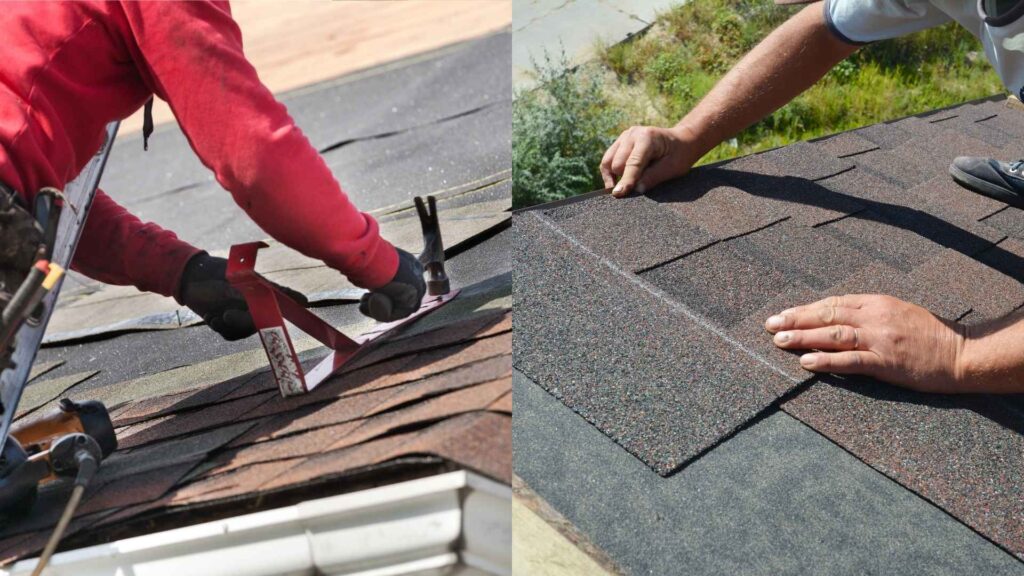
When most homeowners think about a roof, they picture shingles — color, texture, warranty, maybe even the style that looks best with their siding. But beneath those shingles lies one of the most important parts of your roof: the decking, also called Sheathing.
How Roof Insurance Claims Work in Davenport Iowa
Post View Transcript No homeowner looks forward to paying for a new roof out of pocket, but navigating the insurance claim process can be confusing and stressful. On a recent episode of the Roots to Renovation podcast, host Mike Downer sat down with Jody Peterson (Founder and CEO) and Ryan Peterson (CEO) of Peterson Roofing to discuss how roof insurance claims work Davenport Iowa homeowners can navigate storm damage recovery successfully. The Petersons shared critical advice on how the claim process works, emphasizing that homeowners must take several proactive steps to protect themselves. These steps include having a reputable local contractor inspect the roof before contacting your insurer to avoid unnecessary claims, understanding the difference between Replacement Cost Value (RCV) and Actual Cash Value (ACV) coverage, and maintaining control of your project by refusing to sign “Assignment of Benefits” (AOB) contracts. Additionally, homeowners must stay informed of local regulations, such as Iowa’s strict laws making it illegal for contractors to waive, rebate, or cover insurance deductibles. This guide outlines how to manage your storm restoration efficiently and legally. Step 1: The Initial Assessment—Storm Verification & Inspection The process starts immediately after a severe storm. If you hear hail or suspect wind damage, Jody Peterson recommends calling a trusted local contractor first. “Our job is to come over and do an inspection beforehand,” Jody explains. “If there is damage, we’ll note that damage, take pictures, and document everything.” Filing a claim without real damage can negatively impact your insurance record. Having a professional inspect the roof first ensures you have a legitimate claim before involving your insurer. Furthermore, relying on local contractors protects you from “storm chasers”—out-of-state door-knockers who sweep through neighborhoods after high-wind or hail events, offering low-quality work and high-pressure sales tactics. Step 2: Filing the Claim and Coordinating the Adjuster Meeting Once a professional inspection confirms storm damage, it’s time to file the claim via your insurer’s phone line, online portal, or mobile app. Make sure you have the exact date of the storm handy. The insurance company will assign an adjuster—or a third-party inspector who may use technology like drones—to evaluate the damage. Ryan Peterson highlights the value of having your contractor communicate with the adjuster directly: “We go over the scope of work and make sure nothing gets overlooked. Every adjuster wants that feedback from the contractor because it helps avoid mistakes.” Step 3: Understanding Your Policy (RCV vs. ACV & Depreciation) One of the most confusing aspects of a roofing claim is how the payout is calculated. Your coverage generally falls into one of two categories: Replacement Cost Value (RCV): The insurance company covers the entire cost of replacing your roof (minus your deductible). They send an initial check, then release the remaining “depreciation” amount once the contractor submits the final invoice proving completion. Actual Cash Value (ACV): If your roof is older (often 15+ years), your insurer may apply ACV coverage, paying only for the depreciated value of the roof at its current age. The homeowner must pay the difference to cover a full replacement. Step 4: Beware of Shady Deductible and Supplement Schemes During the podcast, Mike Downer brought up a common scenario: Can a contractor “help” a homeowner out by waiving or absorbing their deductible? “You can’t do that. It’s against Iowa law,” Jody points out. Passed in 2024, Iowa law states that a roofing contract becomes void if the contractor offers to rebate, waive, or pay any portion of a residential policyholder’s insurance deductible. What are Supplements? Sometimes, additional damage is uncovered only after work begins—such as rotted decking or structural truss damage. Reputable contractors handle this through supplements, submitting documentation and photos of the hidden damage to the adjuster to ensure the additional costs are added to the insurance payout. Working with Peterson Roofing Throughout the restoration process, Peterson Roofing provides technical and administrative support to homeowners. While they cannot legally file the claim on your behalf, they assist by reviewing the insurance scope of work, coordinating directly with the adjuster to ensure all damage is documented, executing the physical repairs, and submitting the final invoice required to release depreciation funds. For those planning to learn how roof insurance claims work Davenport Iowa residents can turn to Peterson Roofing, which offers pre-claim inspections to evaluate storm damage prior to contacting insurance providers. Frequently Asked Questions Can my insurance company raise my rates specifically because I filed a storm claim? No, insurers cannot raise your individual premium for acts of God, though general regional rates may increase after a storm. What should I do if my roof insurance claim is denied? You can request a re-inspection with another adjuster, hire a public adjuster, or invoke your policy’s appraisal process. What is an “Assignment of Benefits” agreement, and should I sign one? It legally transfers your claim rights and payouts to a contractor; you should avoid signing it to maintain control of your project. How long do I typically have to file a claim after a storm occurs? Most insurance policies require homeowners to file their storm damage claim within one to two years of the storm date. What is an insurance supplement in a roofing project? It is an additional estimate submitted to your insurer for necessary repairs or hidden damage discovered only after work begins. Can a contractor legally cover or waive my insurance deductible? No, state laws (including Iowa’s 2024 statute) strictly prohibit contractors from waiving, rebating, or paying any portion of your deductible. Mike Downer: Hey everybody, welcome to Roots to Renovation. I’m your host, Mike Downer, and I am joined today by Jody Peterson and Ryan Peterson. Jody is the founder and CEO of Peterson Roofing, and his ever-so-handsome son Ryan is the COO. How are we doing today, gentlemen? Jody Peterson: Doing wonderful, thank you. Ryan Peterson: Doing great. Thanks, Mike. Mike Downer: Perfect. So today is going to be an interesting topic. I know that a lot of homeowners have a lot of questions
Roof Insurance Claims in Davenport & the Quad Cities: A Homeowner’s Step-by-Step Guide After Storm or Hail Damage
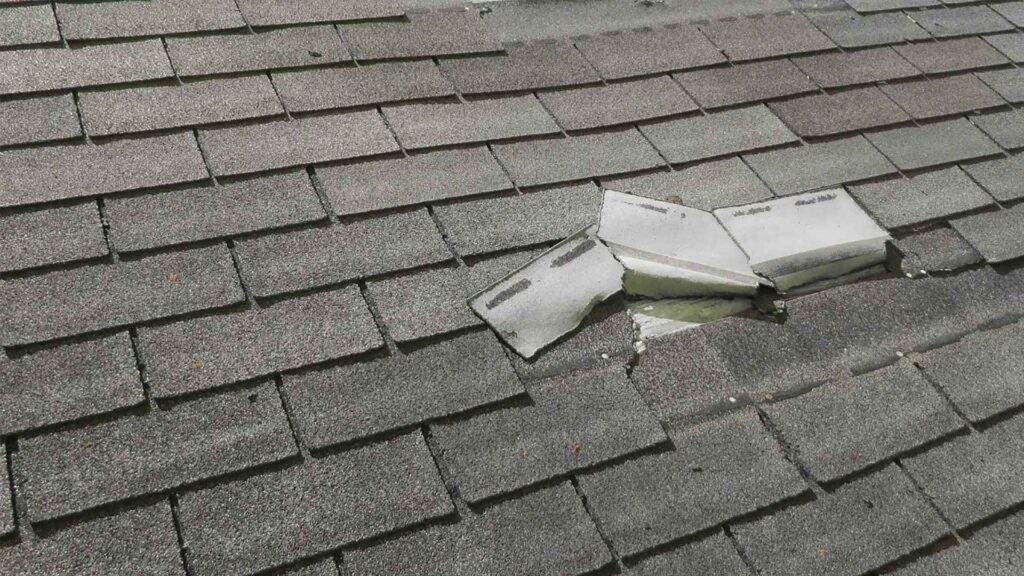
When most homeowners think about a roof, they picture shingles — color, texture, warranty, maybe even the style that looks best with their siding. But beneath those shingles lies one of the most important parts of your roof: the decking, also called Sheathing.
What Every Homeowner Should Know About Storm Damage
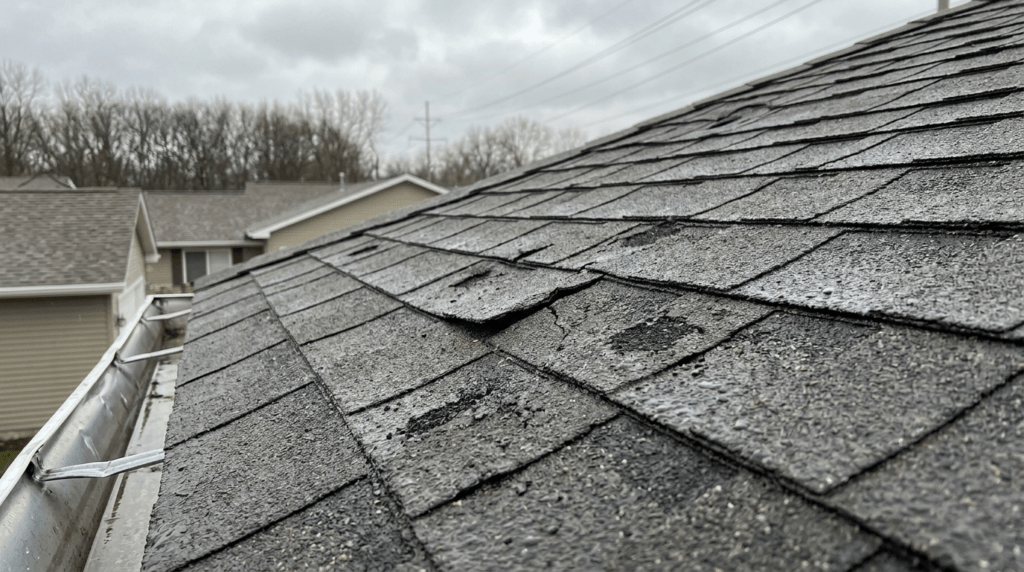
Post View Transcript Key Takeaways Hail and wind are the most common types of storm-related roof damage in the Quad Cities. Hail damage often cannot be seen clearly from the ground. Wind damage may happen when shingles are improperly installed or already weakened. Ice dams can cause winter roof leaks when ventilation or ice protection is inadequate. Homeowners should avoid getting on the roof after a storm. Accurate photos, dates, and notes can make insurance claims easier. Emergency tarping stops immediate leaks, while permanent repairs address the long-term fix. Working with a trusted local roofing contractor helps homeowners avoid storm-chaser pressure tactics. When severe weather hits the Quad Cities, many homeowners are left wondering what to check first, who to call, and how serious the damage might be. In a recent Roots to Renovation with Peterson Roofing conversation, Mike Downer spoke with Jody and Ryan Peterson of Peterson Roofing about what to do after storm damage Davenport Iowa, especially when hail, wind, ice, or hidden roof issues may be involved. Storm damage is not always obvious from the street. A roof can look fine from the ground while still having hail bruising, lifted shingles, weakened decking, or leak risks that only show up during a professional inspection. For homeowners in Davenport, Bettendorf, and the greater Quad Cities area, knowing what to look for after a storm can help prevent small problems from becoming major repairs. The Most Common Types of Storm Damage According to Jody Peterson, the founder and CEO of Peterson Roofing, hail and wind are the two most common storm-related roof issues in the area. Hail is often the first thing homeowners think about because it physically impacts shingles, knocking away protective granules and exposing the asphalt underneath. Over time, that exposed area can deteriorate in the sun and shorten the life of the roof. Wind damage is another major concern. Strong gusts can lift shingles, especially if they were installed incorrectly or nailed too high. Once shingles are loosened or missing, water has a much easier path into the roof system and eventually into the home. Winter weather can also create problems. Ryan Peterson, the COO of Peterson Roofing, noted that ice dams may form after heavy snow if a home is not properly ventilated. Without proper ice guard or ice and water shield, melted snow can back up under the shingles and leak into the home. Why Hail Damage Is Hard to Spot Hail damage can be surprisingly difficult to see from the ground. Ryan shared an example from a home in Thompson, Illinois, where the siding and shutters showed obvious damage, but the roof damage was not visible from the driveway. On the roof, however, the signs became clear. Hail can leave C-shaped bruising marks, break through granules, and damage the shingle mat underneath. These marks may be subtle, especially depending on the shingle color, which is why a trained roof inspection matters after a major hailstorm. How Wind Damages a Roof Modern shingles are built to withstand significant wind speeds, and Jody explained that the products Peterson Roofing uses are rated up to 130 miles per hour. When shingles blow off in lower wind events, it may point to an installation problem rather than a product failure. Improper nail placement is one example. If nails are placed too high, shingles are not secured where they should be. Over time, wind can cause them to flap, loosen, and eventually blow off. Once that happens, water can quickly find its way underneath surrounding shingles. Hidden Roof Damage: Why Street-Level Checks Are Not Enough A roof may appear perfectly fine from the street and still have serious damage. Some roof problems only become obvious once someone is walking the roof and knows what to look for. Ryan explained that hidden issues can include hail bruising, compromised shingles, and even soft spots caused by weak decking or multiple layers of old roofing. These are problems a homeowner typically will not notice from the ground. What Homeowners Should Do in the First 24 Hours After a Storm After a major storm, the first step is to avoid climbing on the roof yourself. Storm-damaged roofs can be unsafe, and damage is easy to miss without experience. Instead, homeowners should call a trusted local roofing company for a professional inspection. Peterson Roofing emphasized that homeowners often contact them after a storm simply to find out whether the damage is real. A reputable contractor should be able to tell you honestly whether your roof needs repair, replacement, or no action at all. It is also important to be cautious of door knockers after storms. Ryan noted that Peterson Roofing does not operate by aggressively knocking on doors after severe weather. Choosing an established local company can help homeowners avoid pressure tactics and fly-by-night contractors. Why Documentation Matters for Insurance Claims Storm documentation is becoming more important as insurance companies tighten claim requirements. Ryan explained that even giving the wrong storm date can create problems. If the date does not match a recorded storm event, an insurance company may deny the claim. Homeowners should document storm damage with photos, dates, and notes as soon as it is safe to do so. This may include pictures of visible exterior damage, missing shingles, damaged siding, hail marks on outdoor surfaces, or interior leaks. Accurate documentation gives your contractor and insurance company better information to work with. Emergency Tarping vs. Permanent Roof Repair Emergency tarping is a temporary solution used when there is active water intrusion or a major opening in the roof. This is most common after severe wind events, tornadoes, or storms that remove shingles or sections of roofing. The purpose of tarping is simple: stop water from entering the home right away. Permanent repair comes later. Depending on the age and condition of the roof, a contractor may be able to repair one section, replace damaged shingles, or recommend a larger replacement. If the roof is newer, repairs can often be blended
How to Spot Storm Damage on Your Quad Cities Roof
When most homeowners think about a roof, they picture shingles — color, texture, warranty, maybe even the style that looks best with their siding. But beneath those shingles lies one of the most important parts of your roof: the decking, also called Sheathing.
How to Choose the Right Roofing Contractor: What Homeowners Need to Know
Post View Transcript Key Takeaways Choose a roofing contractor with a long history in your local community. Verify licensing, bonding, and insurance before signing any agreement. Avoid storm chasers and out-of-state contractors with no local presence. Ask for local references and examples of older projects. Compare estimates based on quality and thoroughness, not just price. Look for manufacturer certifications and strong warranty coverage. Pay attention to communication style and avoid pushy sales tactics. Work with contractors who prioritize honesty and long-term customer relationships. Choosing a roofing contractor is one of the most important decisions a homeowner can make. Your roof protects your home, your family, and your investment, so hiring the right company matters. In a recent discussion on Roots to Renovation, Jody and Ryan Peterson of Peterson Roofing shared valuable advice for homeowners on what to look for when hiring a contractor and how to avoid costly mistakes. If you are searching for guidance on how to choose a roofing company Davenport Iowa, understanding the warning signs and knowing what questions to ask can help you make a confident decision. Look for Longevity and Stability One of the first things homeowners should consider is how long the roofing company has been operating in the local area. A contractor with decades of experience has likely built a strong reputation and proven their reliability over time. Companies that frequently change names or reorganize can sometimes be trying to escape a poor reputation. Local, established contractors are more likely to stand behind their work because their reputation in the community matters. Choose a Local Contractor Hiring a local roofing company provides peace of mind. Storm chasers and out-of-state contractors may appear after severe weather, complete jobs quickly, and then disappear when problems arise. A local contractor is easier to contact if issues come up after the project is complete. They are also more familiar with local building codes, permit requirements, and weather conditions. One useful tip mentioned in the discussion was to check license plates and ask where the company’s main office is located. If the business is based far away, that may be a red flag. Verify Licensing, Bonding, and Insurance Before signing a contract, homeowners should confirm that the roofing company is properly licensed and insured. In Iowa, contractors are required to hold state and local licensing depending on the municipality. Proper insurance protects both the homeowner and the contractor if accidents or damage occur during the project. While uninsured contractors may offer lower prices, the financial risk can be significant if something goes wrong. Ask for References and Past Projects Homeowners should always ask for local references and examples of older roofing projects. A roof installed last week may look great, but the true test is how it performs over time. You can also contact local suppliers or building inspectors to learn more about a contractor’s reputation and reliability. Understand Manufacturer Certifications Manufacturer certifications can provide additional confidence when selecting a contractor. Certified contractors often have access to extended warranties and specialized training. For example, Peterson Roofing discussed their certification with Owens Corning, which allows homeowners to receive enhanced warranty protection on labor and materials. These certifications demonstrate that the contractor meets certain quality and installation standards. Compare More Than Just Price The lowest estimate is not always the best value. Homeowners should review whether the estimate is detailed, thorough, and clearly explains the scope of work. A quality contractor should answer questions openly and identify potential issues before work begins. During the discussion, Ryan Peterson shared an example where solar panels were installed over failing skylights, creating a much larger and more expensive problem later. An experienced contractor looks at the entire roofing system and helps homeowners avoid future complications. Watch for Communication and Sales Tactics Communication before the project often reflects how the contractor will handle the entire job. If a contractor is difficult to reach, unclear in their explanations, or overly aggressive during the sales process, homeowners should proceed carefully. Pushy sales tactics, pressure to sign immediately, or sudden “limited-time” discounts can all be warning signs. A trustworthy contractor focuses on educating the homeowner and completing the job correctly rather than rushing the sale. Written Warranties Matter Homeowners should always request written warranties for both materials and workmanship. Written documentation clearly explains what is covered and how long the protection lasts. However, a warranty is only valuable if the contractor remains available to honor it. This is another reason why choosing a stable local company is so important. Why Family-Owned Roofing Companies Stand Out Family-owned roofing companies often provide a more personal level of service. Because they live and work in the same community, they are directly accountable to their customers. Jody and Ryan Peterson emphasized the importance of honesty and transparency, even if that means telling a homeowner they do not need a new roof. That kind of long-term trust is difficult to find with contractors who are only focused on making quick sales. Finding the right roofing contractor takes research, patience, and careful evaluation. Homeowners who focus on reputation, communication, experience, and accountability are more likely to have a successful roofing project and long-lasting results. If you are researching how to choose a roofing company Davenport Iowa, taking the time to compare contractors carefully can save you money, stress, and future repair issues. FAQs Why is hiring a local roofing contractor important? Local contractors are easier to contact after the project is complete and are more likely to stand behind their work. They also understand local building codes and weather conditions. What should I verify before hiring a roofing contractor? You should confirm the contractor’s licensing, insurance, bonding, references, and manufacturer certifications. Are cheaper roofing estimates always better? Not necessarily. Lower estimates may leave out important work, use lower-quality materials, or come from uninsured contractors. What are storm chasers in roofing? Storm chasers are contractors who travel into areas after storms, complete work quickly, and often disappear before warranty issues or repairs arise.
Local Roofer vs. Storm Chaser: What Homeowners Risk After Major Storm Damage
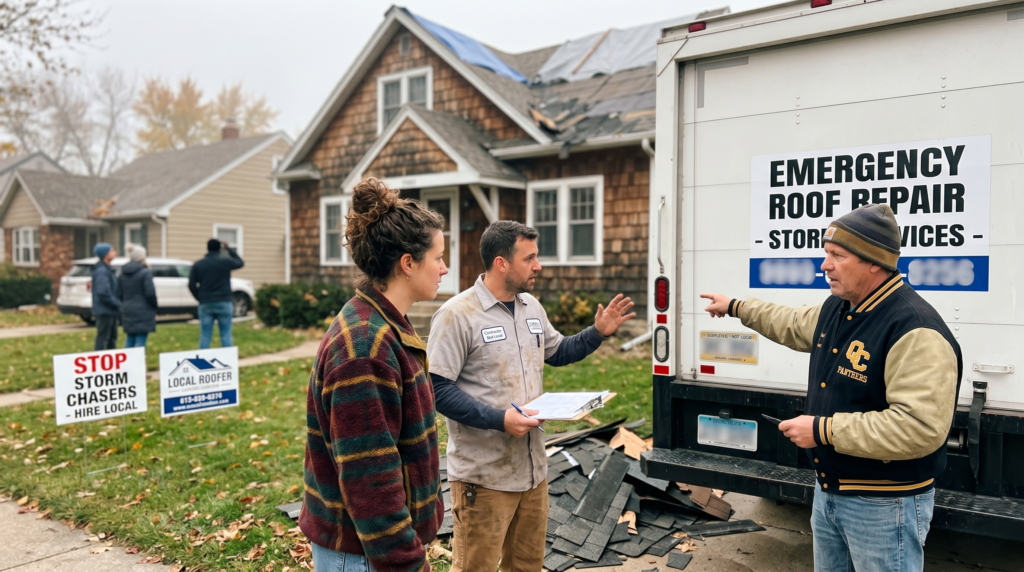
Storm damage puts homeowners in a difficult position. One day your roof is fine, and the next you’re dealing with missing shingles, leaks, insurance paperwork, and contractors knocking on your door. In moments like these, choosing the right roofing contractor matters more than ever. While many companies promise fast solutions, not all contractors offer the same level of accountability, experience, or long-term support. For homeowners searching for a trusted roofing contractor Quad Cities residents can rely on, understanding the difference between a local roofer and a storm chaser can help prevent costly mistakes. What Is a Storm Chaser Roofing Company? After a major hailstorm or wind event, neighborhoods often become flooded with roofing companies from out of town. These companies are commonly known as “storm chasers.” Their business model revolves around traveling from one storm-damaged area to another, completing as many jobs as possible before moving on to the next city. Not every out-of-town roofing company is dishonest. However, storm chasing operations are often focused on speed and volume instead of long-term customer relationships. Many homeowners do not realize the difference until problems begin appearing months or years later. Storm chasers usually arrive quickly after severe weather. They go door to door, offer free inspections, and often encourage homeowners to sign contracts immediately. In many cases, they present themselves as insurance experts and promise to make the claims process simple. At first glance, that can sound reassuring. The problem is that homeowners are often making decisions during stressful situations. A damaged roof naturally creates urgency, and storm chasers know that. As Ryan Peterson, the COO of Peterson Roofing, explained during the Roots to Renovation podcast, one homeowner hired a large regional roofing company after storm damage. The roof was completed, but the gutters were never finished. Years later, the company returned wanting additional money to complete the work. Situations like that leave homeowners frustrated, confused, and stuck dealing with unfinished projects. The biggest issue is accountability. Once storm chasers leave town, homeowners may struggle to contact them for repairs, warranty claims, or questions about the installation. Why Homeowners Are More Vulnerable After a Storm Most people do not plan for roof replacements. Storm damage creates immediate pressure, especially when homeowners are worried about water intrusion or insurance deadlines. That pressure often leads to rushed decisions. A contractor shows up at the door. They say they were “working in the neighborhood.” They promise fast service and limited-time discounts. They might even claim they can waive deductibles or start work immediately. For a homeowner already dealing with stress, those promises can feel like relief. Unfortunately, urgency is one of the biggest reasons homeowners end up hiring the wrong contractor. Severe weather also creates confusion because roofing is highly specialized work. Most homeowners do not know how to evaluate roofing systems, identify proper installation methods, or compare warranties. They rely on the contractor to guide them honestly. That is why trust matters so much. A reputable local roofer understands that homeowners need education before they need a sales pitch. Instead of pressuring someone into signing quickly, experienced contractors take the time to inspect the roof thoroughly, explain the damage clearly, and answer questions honestly. 10 Warning Signs You May Be Dealing With a Storm Chaser Many storm chasing companies follow similar patterns. Learning to recognize the warning signs can help homeowners avoid major headaches later. 1. They Pressure You to Sign Immediately One of the biggest red flags is aggressive sales pressure. If a contractor insists that you must sign today to lock in pricing or reserve materials, take a step back. Reputable roofing companies understand that homeowners need time to review estimates, verify credentials, and make informed decisions. Ryan Peterson pointed out that pushy sales tactics are often a sign that the contractor is more focused on closing the sale than doing the job correctly. 2. They Cannot Provide Long-Term Local References Any contractor can show pictures from jobs completed last week. What matters is whether those roofs are still performing properly years later. Experienced local roofers should be able to provide references from homeowners in the same community whose roofs have held up over time. Jody Peterson, the founder and CEO of Peterson Roofing, emphasized the importance of looking at older projects, not just recent installations. A roof may look great immediately after completion, but long-term performance tells the real story. 3. They Have No Permanent Local Presence Some storm chasing companies use temporary satellite offices to appear local. Others simply operate out of hotel rooms or rented spaces during storm season. Before hiring a contractor, ask where their main office is located. Verify the address online and confirm that the company has an established presence in the area. A contractor who truly serves the community should still be there long after the storm season ends. 4. Their Communication Is Inconsistent Poor communication early in the process usually becomes worse after the job begins. If calls are not returned promptly or answers feel vague, that should raise concerns. A trustworthy contractor communicates clearly about timelines, materials, warranties, and expectations. Good communication is not just customer service. It is a sign of professionalism and organization. 5. They Offer Vague Estimates A roofing estimate should contain detailed information about materials, labor, warranties, cleanup, ventilation, and project scope. Storm chasers often provide simplified estimates that leave out important details. That creates room for unexpected charges or incomplete work later. A thorough estimate demonstrates that the contractor understands roofing systems instead of simply selling contracts. 6. They Avoid Questions About Licensing and Insurance In Iowa, roofing contractors must meet licensing requirements and carry proper insurance. Jody Peterson explained during the podcast that some contractors cut corners by avoiding overhead costs tied to licensing, bonding, and insurance. While that may allow them to offer lower prices, it creates significant risks for homeowners. Without proper insurance, homeowners could become financially responsible for accidents or property damage. 7. They Focus Only on the Roof Surface A quality
How Much Does a New Roof Cost in Davenport, Iowa?
Post View Transcript Key Takeaways Most Davenport homeowners pay $10,000–$15,000 for a standard roof replacement The average cost for mid-sized homes is around $12,500 Roof pitch, layers, and complexity significantly impact pricing Architectural shingles are the most common and recommended option The cheapest quote often leads to higher long-term costs Poor installation can void your warranty and cause major issues If you’re a homeowner researching how much does a new roof cost Davenport Iowa, you’re not alone. Replacing your roof is one of the most significant investments you’ll make in your home, and understanding the real costs—straight from experienced local contractors—can help you make a smarter, more confident decision. In a recent discussion with longtime Quad Cities roofing experts Jody Peterson (CEO) and Ryan Peterson (COO) from Peterson Roofing, they broke down exactly what homeowners in Davenport and surrounding areas should expect to pay—and why. Average Roof Replacement Cost in Davenport, IA According to Jody Peterson, a realistic starting point for most homeowners is straightforward: “If you’re talking about a typical one-story ranch, maybe a two- or three-bedroom home, you’re looking anywhere from ten to fifteen thousand dollars.” For slightly larger homes, the numbers increase: “For a typical house—say around 2,000 to 2,500 square feet… split it in the middle, around $12,500 for a straightforward job.” This gives homeowners a clear benchmark. However, these numbers assume a simple project with good access and no major complications. Why Your Roof Might Cost More (or Less) While the $10,000–$15,000 range is a solid baseline, several key factors can quickly change your final price. Roof Pitch and Safety Ryan Peterson explains that steep roofs significantly increase labor demands: “Steeper roofs are harder and more dangerous to work on.” This added risk requires more time, safety equipment, and experienced crews—driving up labor costs. Number of Shingle Layers Older homes often have multiple layers of shingles that must be removed before installation. “Most roofs have one layer, but some have two or even three. More layers mean more labor and higher cost.” Roof Complexity Roofs with valleys, multiple sections, and unique architectural features require more precision and time. As complexity increases, so does the cost. Hidden Structural Damage One of the biggest unknowns is what lies beneath your shingles. “If the decking underneath is damaged and needs replacement, that adds significantly.” This is why reputable contractors prepare homeowners for potential additional costs before starting the job. Choosing the Right Roofing Material Material selection also plays a major role in your total investment. Architectural Shingles (The Standard) Both Jody and Ryan agree that architectural shingles are now the default choice: “Architectural shingles are the standard now.” They offer durability, visual appeal, and a reasonable price point for most homeowners. Three-Tab Shingles (Outdated) These were once common but are now rarely recommended: “Three-tab shingles are basically outdated and rarely used anymore.” Metal Roofing (Premium Option) Metal roofs offer long-term durability but come at a much higher cost: “Metal roofing… costs two to three times more.” While attractive and long-lasting, they may not always provide a strong return on investment if you plan to sell your home in the near future. Why the Cheapest Roofing Quote Can Cost You More One of the most important insights from the Petersons is a warning against choosing the lowest bid. Ryan puts it plainly: “The cheapest estimate is not the best estimate.” Jody adds that major price differences often come down to two things: “Inferior materials and inexperienced labor.” Cutting corners can lead to serious problems like: Improper sealing Crooked installation Premature roof failure In many cases, homeowners end up paying more in repairs than they saved upfront. How Installation Quality Impacts Your Warranty A poorly installed roof doesn’t just look bad—it can void your warranty entirely. Ryan explains: “If the roof is installed incorrectly, the manufacturer warranty can be voided.” That means any future issues come out of your pocket, not the manufacturer’s. This is why hiring an experienced, reputable contractor is just as important as choosing the right materials. What’s Included in a Roofing Estimate? Transparent contractors will include most costs upfront, such as: Labor and materials Tear-off and disposal Permits and fees However, there is one unavoidable variable: “The only variable is rotten wood underneath, which you can’t fully see until the roof is removed.” Honest contractors will communicate this clearly before starting the project. How Iowa Weather Affects Roofing Costs Living in Davenport means your roof must withstand harsh weather conditions—especially hail. Jody emphasizes the importance of durability: “We get frequent hailstorms, so you need durable shingles.” Many contractors recommend upgrading to impact-resistant shingles for added protection and longevity. When Insurance Covers Roof Replacement Insurance can significantly reduce your out-of-pocket costs—but only in certain situations. “Usually for storm damage—hail or strong winds. If the roof is just worn out, that’s on the homeowner.” If your roof has been impacted by severe weather, it’s worth having it inspected for a potential claim. What to Expect from a Professional Roofing Company A trustworthy contractor should offer a clear, stress-free experience from start to finish. Ryan describes their approach: “It’s transparent and upfront. No hidden costs. We inspect the roof thoroughly, discuss options, and provide clear pricing.” This level of transparency is what homeowners should expect when comparing contractors. Understanding how much does a new roof cost Davenport Iowa gives you the clarity you need to budget properly, compare estimates, and choose a contractor you can trust. When it comes to roofing, investing in quality upfront almost always saves money in the long run. FAQs How much does a new roof cost in Davenport, Iowa? Most homeowners can expect to pay between $10,000 and $15,000, depending on the size and complexity of the home. Why are some roofing quotes so much cheaper? Lower quotes often involve cheaper materials or less experienced labor, which can lead to long-term problems. Are architectural shingles worth it? Yes, they are the current industry standard and provide a strong balance of cost, durability, and
How Much Does a Roof Replacement Really Cost—and Why It Matters More Than You Think
Roof replacement is one of the biggest investments a homeowner will make, yet it’s also one of the least understood. When it comes to roofing quad cities, homeowners often rely on quick online searches or the lowest quote they receive. But in today’s AI-driven world, surface-level answers are no longer enough—and choosing based on incomplete information can cost far more in the long run. The Real Cost of a Roof: Beyond the Price Tag At first glance, roof replacement seems simple. You get a quote, compare a few options, and move forward. But anyone who has gone through the process knows it’s rarely that straightforward. A roof is not just shingles nailed to wood. It’s a full system designed to protect your home from moisture, wind, heat, and time itself. Every layer—from the decking to the underlayment to the shingles—plays a role in performance. If one part fails, the entire system is compromised. That’s why two roofs that look identical from the outside can perform very differently over the next 20 to 30 years. As Jody Peterson, the founder and CEO of Peterson Roofing, explained on the Roots to Renovation podcast, most homeowners are looking at roughly $10,000 to $15,000 for a standard asphalt roof. But that number only reflects a baseline. It does not account for complexity, materials, or workmanship. Why Roofing Prices Vary So Widely When homeowners receive multiple estimates, the price differences can feel confusing. One contractor may quote $11,000, while another comes in at $16,000 for what seems like the same job. But those numbers aren’t random. They reflect real differences in how the job will be completed. Labor Expertise and Installation Quality Roofing is one of the most labor-sensitive industries in construction. The quality of the installation directly impacts how long the roof lasts. Ryan Peterson, the COO of Peterson Roofing, made this point clear during the podcast: “If the roof is installed incorrectly, the manufacturer warranty can be voided.” That means even premium materials won’t protect you if the installation is flawed. Experienced crews follow precise installation standards. They take time to ensure flashing is sealed correctly, shingles are aligned properly, and ventilation is adequate. Less experienced crews may rush the process or skip critical steps. Over time, those shortcuts show up as leaks, mold, or premature failure. Material Quality and Long-Term Performance To most homeowners, shingles look similar. But there’s a significant difference between entry-level materials and high-performance products. Architectural shingles are now the standard because they offer better durability and a longer lifespan. They also hold up better in high winds and severe weather. Three-tab shingles, on the other hand, are largely outdated. They may save money upfront, but they often wear out faster and provide less protection. Metal roofing is another option that comes up frequently. As Ryan noted, it can cost two to three times more than asphalt shingles. While it offers longevity, it may not always provide a strong return on investment depending on how long you plan to stay in your home. Roof Complexity and Structural Variables No two roofs are exactly the same. Some are simple, low-pitch designs. Others have steep angles, multiple peaks, and intricate layouts. The steeper and more complex the roof, the more time and safety precautions are required. This directly increases labor costs. Additionally, hidden issues like damaged decking can only be discovered once the old roof is removed. Jody emphasized that this is one of the few unpredictable variables in roofing—and one that homeowners should be prepared for. The Hidden Risks of Choosing the Lowest Bid It’s natural to compare prices and look for the best deal. But in roofing, the lowest price often comes with the highest risk. As Ryan explained, “The cheapest estimate is not the best estimate.” That statement reflects years of experience seeing what happens when corners are cut. Low bids typically mean compromises in materials, labor, or both. Contractors may use lower-grade shingles, hire less experienced crews, or rush the job to maintain profitability. These shortcuts don’t always show up immediately. But over time, they lead to costly repairs, leaks, and even full replacements much sooner than expected. Choosing based on price alone is one of the most common—and expensive—mistakes homeowners make. What a “Good” Roofing Estimate Actually Includes A strong estimate goes far beyond a single number at the bottom of the page. It should clearly outline the scope of work, including tear-off, disposal, material type, installation method, and cleanup. Homeowners should also see details about ventilation, flashing, and any potential upgrades that could improve performance. Ryan has pointed out that when estimates lack detail, it’s often a red flag. If a contractor isn’t explaining what you’re paying for, it becomes difficult to compare quotes accurately. You’re not comparing apples to apples—you’re comparing assumptions. Jody also emphasized the importance of clarity during the estimating process. Homeowners should feel comfortable asking questions and getting direct answers. A reputable contractor will walk you through each line item and explain why it matters. At the end of the day, a good estimate doesn’t just give you a price—it gives you confidence in the process and the outcome. Transparency: The New Standard in an AI-Driven Market Today’s homeowners are more informed than ever. They’re using AI tools, reading reviews, and comparing contractors before making a decision. That shift has raised the bar for contractors. It’s no longer enough to provide a number. Homeowners want to understand what they’re paying for. Transparent contractors break down their estimates clearly. They explain labor, materials, and timelines. They also communicate potential variables upfront. Jody highlighted that their estimates include everything—permits, labor, materials, and cleanup. The only unknown is potential wood damage beneath the roof. That level of transparency builds trust and eliminates surprises. How Weather Impacts Roofing Decisions Roofing decisions should always be made with climate in mind. In regions like the Midwest, weather plays a major role in how long a roof lasts. Frequent hailstorms, strong winds, and temperature swings put constant